How to Sponsor Spouse in Canada - Permanent Residence (2026 FULL Guide)
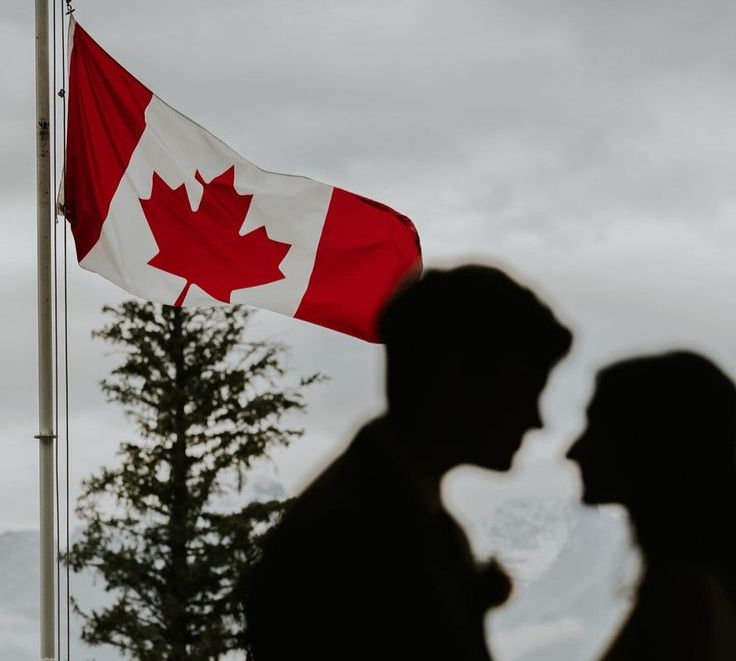
If you're a Canadian citizen or permanent resident with a spouse, common-law partner, or conjugal partner living outside the country (or here on temporary status), spousal sponsorship is the pathway that lets you bring them to Canada as a permanent resident.
Sponsor Spouse in Canada - Permanent Residence
It's one of the more accessible immigration programs — there's no minimum income requirement — but it's also one of the most heavily scrutinized, because IRCC's main job is to confirm the relationship is genuine.
This guide walks through eligibility, the two application streams, current fees, processing times, and the documents that make or break a file.
This article is for general information only and isn't legal advice. Every file has its own facts, and small details can change the right strategy. If you'd like a case-specific assessment, our team at Brace Law is happy to help.
Who You Can Sponsor?
IRCC recognizes three relationship categories under the spousal/partner sponsorship program:
Spouse — you're legally married, and the marriage is valid both in the country where it took place and under Canadian law.
Common-law partner — you and your partner have lived together continuously for at least 12 months.
Conjugal partner — you've been in a committed relationship for at least 12 months but couldn't cohabit because of an immigration or legal barrier (this category is used less often and only applies in specific circumstances).
Sponsor Eligibility
To sponsor a spouse or partner, you generally need to:
Be a Canadian citizen, registered under the Indian Act, or a permanent resident of Canada
Be at least 18 years old
Be able to prove your relationship is genuine and wasn't entered into primarily to gain immigration status
Not be receiving social assistance for a reason other than a disability
Not be in default on a previous sponsorship undertaking or immigration loan
Not be under a removal order, incarcerated, or otherwise inadmissible for certain reasons
Unlike parent and grandparent sponsorship, there's no minimum necessary income test for spousal sponsorship. The financial bar here is much lower — the relationship itself is what gets the closest look.
Inland vs. Outland: Choosing Your Stream
This is the first strategic decision, and it shapes your whole timeline.
Outland sponsorship — used when the sponsored spouse is applying from outside Canada (even if they're currently visiting). The file is assessed by a visa office, and permanent residence is granted before they land. No automatic work permit comes with this stream, but if a refusal happens, you have a right of appeal to the Immigration Appeal Division, where new evidence and witnesses can be introduced.
Inland sponsorship — used when the spouse is already in Canada on valid temporary status (visitor, worker, or student). The couple applies together from within Canada, and the sponsored spouse can apply for a Spousal Open Work Permit (SOWP) at the same time, so they can start working here while the PR application is in process. The trade-off: if the sponsorship is refused, your recourse is limited to judicial review at the Federal Court, which only examines whether the officer made a legal error — it doesn't allow you to submit new evidence.
If your file has any complexity (a prior marriage, limited documentation, a shorter relationship history), the appeal rights that come with outland sponsorship are worth factoring into the decision.
Step-by-Step: How to Apply
Confirm eligibility for both sponsor and sponsored person.
Choose your stream (inland or outland) based on where your spouse currently lives and whether they need to work while waiting.
Gather your documents (see checklist below) — identity, relationship evidence, and admissibility documents for both of you.
Complete the application forms, including the sponsorship application, undertaking, and the sponsored person's application for permanent residence.
Pay the required fees and include your receipts with the application.
Submit online through your IRCC secure account (paper applications are still accepted in limited circumstances).
Complete biometrics if required, and the immigration medical exam for the sponsored person (and any dependants, even those not accompanying to Canada).
Respond promptly to any request for additional information — IRCC will not chase you down, and missed deadlines can result in refusal.
Wait for a decision. If approved, the sponsored spouse becomes a permanent resident (outland: upon landing; inland: upon approval in Canada).
Documents You'll Need
IRCC's completeness check is unforgiving: if a required document or signature is missing, the whole package is returned to you unprocessed — not delayed, returned. That means starting the queue over and losing time.
Always download the current checklist (IMM 5287 for the sponsor, IMM 5533 for the sponsored person) from canada.ca before you submit, since requirements are updated periodically. In general, expect to provide:
Identity documents — passports, birth certificates, national ID
Proof of relationship — marriage or common-law/conjugal relationship evidence, plus ongoing proof the relationship is genuine (photos, communication records, joint finances, travel history, statements from family and friends)
Sponsor's proof of status — citizenship or PR documentation
Police certificates for the sponsored person (and accompanying family members 18+) from every country they've lived in for six months or more since age 18
Immigration medical exam results from an IRCC-approved panel physician
Proof of Canadian residence for the sponsor if applying inland (a recent utility bill, bank statement, or government correspondence)
Any relevant legal documents — divorce certificates from prior marriages, custody arrangements, name changes
If a document genuinely can't be obtained (some countries don't issue police certificates, for example), include a written explanation rather than leaving the field blank.
One important note: once you've submitted, you generally can't add more relationship evidence on your own initiative. Extra documents are only reviewed if IRCC specifically requests them, so it's worth building the strongest possible package the first time rather than planning to top it up later.
Fees (Current IRCC Rates)
As of IRCC's fee list update, the government fees for spousal/partner sponsorship are:
Item | Fee (CAD) |
Sponsor your spouse or partner (includes sponsorship, processing, and Right of Permanent Residence Fee) | $1,260.00 |
Same, without the Right of Permanent Residence Fee (payable later) | $660.00 |
Include a dependent child | $180.00 per child |
Biometrics (individual) | $85.00 |
Biometrics (family of 2+) | $170.00 |
Spousal Open Work Permit (optional, inland only) | separate work permit fee applies |
The Right of Permanent Residence Fee (RPRF) portion is refundable if the application is withdrawn or refused before it's finalized — it's the one fee IRCC will return once processing has started. The sponsorship and processing fees are not refundable once your file is accepted into processing, though a package returned as incomplete before processing begins gets a full refund since it never entered the queue.
Fees are subject to change, so always confirm the current amount on IRCC's official fee list before you pay.
Processing Times
Processing times move monthly based on inventory and application volume, so treat any number as a snapshot rather than a guarantee. As a general range going into mid-to-late 2026, spousal sponsorship applications — both inland and outland — have been running in the neighbourhood of 10 to 14 months for a majority of files, a meaningful improvement from the longer waits seen in some periods over the past couple of years. Complex files (admissibility issues, incomplete documentation, dependants added mid-process) can take longer. Always check IRCC's live processing time tool for the estimate tied to your specific application type, since it's updated more frequently than any blog post can be.
If you applied for a Spousal Open Work Permit alongside an inland sponsorship, that permit is typically processed well before the permanent residence decision, so the sponsored spouse can usually start working months ahead of receiving PR.
A Note for Quebec Residents
If you (the sponsor) live in Quebec, your spouse's application also needs a Quebec undertaking through MIFI, separate from the federal sponsorship application. Quebec periodically caps the number of undertakings it accepts in certain categories, so if you're sponsoring from Quebec, check MIFI's current intake status before you file — and don't submit your Quebec undertaking application until IRCC instructs you to, since a premature submission can result in refusal at the provincial level.
Why Spousal Sponsorship Applications Get Refused
The relationship itself is the central point of scrutiny, and most refusals trace back to one of these:
Thin or inconsistent evidence that the relationship is genuine and ongoing
Missing or incomplete documents, triggering a return under the completeness check
Unresolved admissibility issues — criminal history, prior misrepresentation, or an incomplete medical exam
Failure to respond to an IRCC request within the given deadline
Choosing the wrong stream for a complex case and losing appeal rights as a result
Because this is a relationship-based application rather than a points-based one, presenting a clear, well-organized, and complete evidence package from the outset matters more here than almost any other immigration category.
Considering Sponsorship? Sponsor Spouse in Canada - Permanent Residence?
Spousal sponsorship is accessible on paper, but the documentation standard is exacting, and a returned or refused application can add a year or more to your timeline. At Brace Law, our immigration team works with couples across Oakville, Vaughan, and the greater GTA–Hamilton corridor to prepare complete, well-documented sponsorship files from the start.
If you're ready to bring your spouse or partner home, reach out to Brace Law to talk through your options.


